Please scroll down to the bottom of the page for the most recent upcoming events
-----------------------------------------------------------------------------------------------------------------------------------------------------------------------------------------------------------------------------------------------
Boston Chapter of the ASA Webinar: A Perspective Review of FDA's Draft Guidance on the Use of Bayesian Methodology in Clinical Trials of Drug and Biological Products

Join the Boston Chapter of the ASA for an insightful 1-hour webinar featuring Dr. Yuan Ji, Professor of Biostatistics at The University of Chicago, as he shares his perspective on the FDA's Draft Guidance on the Use of Bayesian Methodology in Clinical Trials of Drug and Biological products
Date: Tuesday, March 3, 2026
Time: 12:00 AM – 1:00 PM ET
Location: Online (Zoom link will be provided to registered attendees)
Cost: Free
Don't miss this opportunity to gain expert insights into the recently released FDA's Draft Guidance on the Use of Bayesian Methodology in Clinical Trials of Drug and Biological products!
Registration Link
Abstract:
This review provides a foundational illustration of Bayesian philosophy as a logical framework for scientific inference, tracing its historical evolution, probability-theoretic underpinnings, and natural connection to human decision-making. I examine the FDA's January 2026 draft guidance, highlighting key provisions relevant to Bayesian methods in clinical trials, with particular emphasis on Phase 3 pivotal studies. Central concepts—including Type I error control, error rate calibration, multiplicity adjustment, and sequential decision-making—are discussed in the context of both calibrated and non-calibrated Bayesian designs. Future perspectives on optimizing Bayesian methods for clinical development are presented, including the practice of calibrating Bayesian decision rules against frequentist Type I error rates. Finally, practical recommendations are proposed for the appropriate application of Bayesian designs and success criteria in regulatory submissions approach improves the precision of treatment effect estimates while reducing the biases associated with borrowing data from external sources.
Reference: Ji, Y., & D, Ph. (2026). Regulatory Expectations for Bayesian Methods in Drug and Biologic Clinical Trials: A Practical Perspective on FDA’s 2026 Draft Guidance (Version 1). arXiv. doi.org/10.48550/ARXIV.2601.14701. Read More
About the Speaker:
Dr. Yuan Ji is Professor of Biostatistics at The University of Chicago. His research focuses on innovative Bayesian statistical methods for translational cancer research. Dr. Ji is author of over 200 publications in peer-reviewed journals including across medical and statistical journals. He is the inventor of many innovative Bayesian adaptive designs such as the mTPI and i3+3 designs, which have been widely applied in dose-finding clinical trials worldwide. His work on cancer genomics has been reported by a large number of media outlets in 2015. He received Mitchell Prize in 2015 by the International Society for Bayesian Analysis. He is an elected fellow of the American Statistical Association.
-----------------------------------------------------------------------------------------------------------------------------------------------------------------------------------------------------------------------------------------------

|
Registration is now open for the Women in Data Science (WiDS) Conference Cambridge, taking place Friday, March 6th from 8:00am - 2:30pm ET at the Microsoft NERD Center, One Memorial Drive in Cambridge, MA.
In collaboration with WiDS Worldwide, MIT and Microsoft Research New England are proud to host the annual conference, which features an all-female line up of speakers and panelists from academia and industry talking about the latest in data science research and applications.
Learn how researchers and leading-edge companies are leveraging data science for success, and connect with potential mentors, collaborators, and others in the field. All genders are invited to attend!
|
|
|
Poster Session
Students, postdocs, and early researchers interested in presenting a poster for the WiDS Cambridge conference can submit an abstract by Wednesday, February 11th, 11:59 pm. Email wids-posters@mit.edu with any questions regarding poster submissions.
Email wids-cambridge@mit.edu with any other questions.
We’re looking forward to seeing you! -
WiDS Cambridge Planning Committee @ MIT IDSS
|
|
|
-----------------------------------------------------------------------------------------------------------------------------------------------------------------------------------------------------------------------------------------------
The May Institute on Computation and Statistics for Mass Spectrometry and Proteomics!
May Institute is taking place on April 27 – May 9, 2026, on the campus of Northeastern University in Boston MA.
For the first time, Northeastern University is issuing an e-badge recognizing successful completion of the May Institute. The e-badge can be displayed on LinkedIn and other social media.
Also new this year, we have a greater focus on AI. We also introduce "bring your own data" sessions, where you can get assistance analyzing your own data.
We gratefully acknowledge the support of our sponsors Biognosys and Fragmatics.
Participants can select a subset of the following programs:
* April 27 - April 28: Quantitative proteomics with Skyline: Susan Abbatiello, Brendan MacLean, Lindsay Pino
* April 28: AI in action: from drug discovery to regulatory insight: Romi Singh, Wengong Jin
* April 29: Quantitative proteomics with FragPipe: Alexey Nesvizhskii, Fengchao Yu
* April 30 - May 1: Beginners R and beginners statistics: Ryan Benz
* April 30 - May 1: Intermediate R, data visualization and statistics: Kylie Bemis
* April 30 - May 1: Applied Python for data analysis and beginners statistics: Arzu Tuğçe Güler
* May 4 - May 6: Statistics for quantitative mass spectrometry & bring your own data clinic featuring a Spectonaut support specialist and MSstats developers: Brian Searle, Olga Vitek, Devon Kohler, Monika Pepelnjak
* May 7 - May 8: Interpretation of proteomic experiments in the context of biomolecular networks with INDRA: Ben Gyori
* May 7 - May 8: Analysis of mass spectrometry images with Cardinal & bring your own data clinic: Kylie Bemis
* May 9: Frontiers in computational methods
-- Michelle Li, Deep learning models for understanding protein interaction networks and phenotype-driven diagnosis of rare genetic diseases
-- Ed Huttlin, Integration of structural predictions and protein interactions for interpretation and discovery
-- Theodore Alexandrov, Metabolite annotation for imaging mass spectrometry using METASPACE
-----------------------------------------------------------------------------------------------------------------------------------------------------------------------------------------------------------------------------------------------
MIT Statistics and Data Science Conference 2026
(SDSCon 2026)
We are pleased to invite you to MIT SDSCon 2026, hosted by the Statistics and Data Science Center on Friday, April 10th
Registration is open here for this year’s event, which will be held on the 8th floor of 51 Vassar Street (Bldg 45) at MIT. Additional information and the agenda can be found at https://sdscon.mit.edu
SDSCon 2026 is a celebration and community-building event for those interested in statistics. Presentations will cover applications of statistics and data science across a wide range of fields and approaches.
As part of the Institute for Data, Systems, and Society (IDSS), the Statistics and Data Science Center (SDSC) is an MIT-wide focal point for advancing academic programs and research in statistics and data science.
-----------------------------------------------------------------------------------------------------------------------------------------------------------------------------------------------------------------------------------------------
Boston Chapter of the ASA 2026 Traveling Course: Random Effects and Recurrent Events in Survival Analysis
The Boston Chapter of the American Statistical Association is pleased to announce that the 2026 Traveling Course will be virtually held on Friday, October 16th, from 1:00 PM to 5:00 PM ET.
Registration
Instructor:
Milind Phadnis, PhD
Associate Professor, Department of Biostatistics & Data Science
University of Kansas Medical Center
Format: Virtual
Description:
A key feature of time-to-event data is the presence of censored or truncated observations, and standard approaches for analyzing such data are commonly covered in introductory statistics courses. However, methods for analyzing recurrent events, some of which may also be censored, are often not covered in introductory training.
Similarly, while random effects are well studied for continuous and dichotomous outcomes, incorporating random effects and recurrent events into time-to-event analyses can be considerably more challenging. As biostatistics and data science continue to advance, recurrent events and clustered survival data are increasingly encountered in practice.
This course will provide an applied introduction to advanced modeling approaches for recurrent event and clustered survival data, with particular attention to the assumptions underlying different models. Real-world examples will be presented using R and SAS, and more advanced modeling approaches will be discussed. The course will emphasize practical application with minimal theoretical derivation.
About the instructor
Dr. Milind Phadnis is an Associate Professor in the Department of Biostatistics & Data Science at the University of Kansas Medical Center. His research and teaching interests include survival analysis, recurrent event data, clustered survival outcomes, and statistical methodology for biomedical research. The course is designed at an applied level for practicing statisticians and researchers interested in expanding their knowledge of modern survival analysis methods.
-----------------------------------------------------------------------------------------------------------------------------------------------------------------------------------------------------------------------------------------------
Boston Chapter of the ASA: 2026 Mosteller Statistician of the Year Award
|
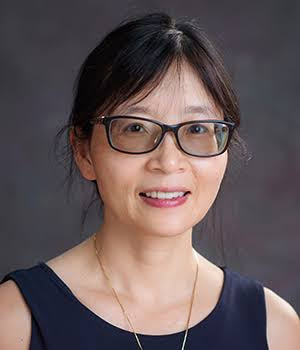
The Boston Chapter of the American Statistical Association is thrilled to announce that Dr. Tianxi Cai, Professor at the Harvard T.H. Chan School of Public Health and the Harvard Medical School, is the esteemed recipient of the 2026 Mosteller Statistician of the Year Award.
|
|
|
|
|
Tianxi Cai, ScD
Professor of Biomedical Informatics, Harvard Medical School
John Rock Professor of Population and Translational Data Sciences, Harvard T.H. Chan School of Public Health
Director, Translational Data Science Center for a Learning Health System (CELEHS)
Date: September 22, 6:00 - 8:00 PM (ET)
Location: Kresge G3, Harvard T.H. Chan School of Public Health, 655 Huntington Ave, Boston, MA 02115
*Light appetizers and refreshments will be served in Kresge cafeteria space.
From Real-World Data to Durable Clinical AI: Building Reliable Evidence Across Institutions and Over Time
The widespread adoption of electronic health record (EHR) systems has created unprecedented opportunities to harness real-world clinical data for artificial intelligence, translational research, and evidence generation. Yet realizing this potential requires addressing a fundamental challenge: EHR data are inherently noisy, heterogeneous, and dynamic. Differences in coding, clinical workflows, patient populations, and data modalities complicate integration across healthcare systems, while temporal and institutional shifts can cause even well-performing models to degrade after deployment. In this talk, I will present a series of analytical frameworks for building reliable and durable clinical AI from multi-modal, multi-institutional EHR data. I will first discuss methods for integrating heterogeneous information across institutions and across structured records and unstructured clinical narratives, including recent opportunities enabled by large language models and representation learning. I will then consider the challenge of developing models that remain reliable as populations and healthcare environments change. Moving beyond reactive retraining, we formulate model maintenance through robust optimization, constructing uncertainty sets of plausible future environments and proactively balancing performance in the current population against robustness to future distributional shifts. I will also discuss new inferential methods for quantifying uncertainty in robust optimization, an important but relatively underdeveloped area. Using examples from longitudinal EHR data across multiple healthcare systems, I will illustrate how these approaches can transform heterogeneous real-world data into reliable evidence and support clinical AI systems that are not only accurate today, but also generalizable across institutions and durable over time.
RSVP Here
Speaker Bio: Dr. Cai’s current research interests are mainly in the area of biomarker evaluation; model selection and validation; prediction methods; personalized medicine in disease diagnosis, prognosis and treatment; statistical inference with high dimensional data; and survival analysis.
In addition to her methodological research, Dr. Cai also collaborates with the I2B2 (Informatics for Integrating Biology and the Bedside) center on developing a scalable informatics framework that will bridge clinical research data and the vast data banks arising from basic science research in order to better understand the genetic bases of complex diseases.
About the Award: Every year the Boston Chapter presents the Mosteller Statistician of the Year award to a distinguished statistician who has made exceptional contributions to the field of statistics and has shown outstanding service to the statistical community, including the Boston Chapter. The award was originally established in 1990 as the Statistician of the Year Award. In 1997, this award was renamed the Mosteller Statistician of the Year award in honor of the 80th birthday of its first recipient, Fred Mosteller.
For a historical perspective on the award and its past recipients, please visit Boston Chapter's Mosteller Statistician of the Year Award.
-----------------------------------------------------------------------------------------------------------------------------------------------------------------------------------------------------------------------------------------------
The May Institute Essentials: Online statistics for Mass Spectrometry, Proteomics and Imaging
May Institute Essentials is a condensed, fully virtual edition of the May Institute, taking place November 2–6, 2026, online each day. Topics include statistical analysis of mass spectrometry, proteomics experiments with MSstats and analysis of mass spectrometry imaging experiments with Cardinal.
Registration includes access to all sessions, interactive discussion with presenters, 1:1 office hours with the tool developers, presentation materials (slides, code, and datasets), and access to the recordings.
We gratefully acknowledge the support of Khoury College of Computer Sciences and the Barnett Institute for Chemical and Biological Analysis at Northeastern University.
The schedule is below.
Nov 2 (Mon) MSstats Day 1 — Differential analysis of label-free proteomics experiments: Devon Kohler, Sarah Szvetecz, Tony Wu
Nov 3 (Tue) MSstats Day 2 — PTMs & Chemoproteomics: Devon Kohler, Sarah Szvetecz, Tony Wu
Nov 4 (Wed) MSstats Day 3 — Interpretation with MSstatsBioNet and INDRA: Tony Wu, Benjamin Gyori
Nov 5 (Thu) Cardinal Day 1 — Introduction to Cardinal, preprocessing, and visualization: Kylie Bemis, Sai Srikanth Lakkimsetty, Ethan Rogers, Yinyue Zhu
Nov 6 (Fri) Cardinal Day 2 — Case studies on statistics and machine learning with MSI data: Kylie Bemis, Sai Srikanth Lakkimsetty, Ethan Rogers, Yinyue Zhu
Please share this widely. More information is at https://vitek-lab.github.io/MIe-2026/
|
|