ASA San Antonio Chapter Virtual Seminar
“Bayesian Monitoring Designs with Multiple Endpoints for Phase II Clinical Trials”
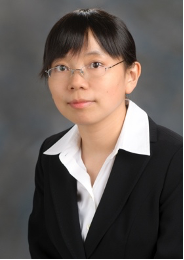
Dr. Jian Wang
Associate Professor
Department of Biostatistics
The University of Texas MD Anderson Cancer Center
Friday, April 17, 11 am CST
Zoom: https://utsa.zoom.us/j/96644803413
Abstract: To evaluate the preliminary therapeutic effect of a new treatment, futility monitoring rules are commonly used in phase II cancer clinical trials to make timely “go/no-go” decisions. Standard approaches typically rely on a single endpoint, which may not adequately capture treatment effects when multiple outcomes are clinically relevant. In this talk, I present two Bayesian monitoring approaches that incorporate multiple outcomes in different settings. For single-arm trials, a hierarchical model integrates response and duration of response into the monitoring rule. For randomized two-arm trials, a win ratio–based framework enables hierarchical comparison of multiple time-to-event outcomes while accounting for their clinical priorities. Simulation studies illustrate that leveraging multiple outcomes can lead to more informed and tailored decision-making compared to conventional single-endpoint designs.
Bio: Dr. Jian Wang is an Associate Professor in the Department of Biostatistics at The University of Texas MD Anderson Cancer Center. She received her PhD in Statistics from the University of Colorado Boulder and completed postdoctoral training in statistical genetics and cancer epidemiology at MD Anderson. Her research focuses on the development and application of statistical methods in statistical genetics, cancer epidemiology, clinical trials, and behavioral research. For more information, please visit her website: https://faculty.mdanderson.org/profiles/jian_wang.html.
ASA San Antonio Chapter Virtual Seminar
“High-resolution feature identification in
high-dimensional clustering”
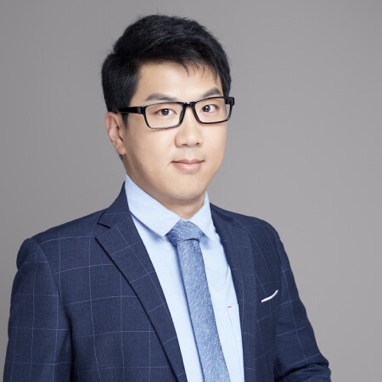
Dr. Xiwei Tang
Associate Professor
Department of Mathematical Science
University of Texas at Dallas
Friday, March 6, 10 am CST
Zoom: https://utsa.zoom.us/j/95583225432
Abstract: Interpretable clustering, which involves identifying heterogeneous subgroups and the informative features that define them, is a critical yet challenging task across various fields, including omics studies, clinical research, and policy evaluation. Existing methods typically either focus narrowly on global feature heterogeneity or treat feature selection and clustering as separate tasks, failing to account for their interaction. To address these limitations, we propose a novel unsupervised learning approach, PAirwise REciprocal fuSE (PARSE), which concurrently pinpoints cluster-specific informative features and conducts high-dimensional clustering effectively. PARSE provides a high-resolution map of features segmenting the population by leveraging a new regularization framework that heavily penalizes features with minor differences across clusters. We establish the oracle property for PARSE and derive lower bounds for clustering and cluster-specific feature identification, demonstrating the method’s optimality. Additionally, we propose an adaptive Expectation-Maximization algorithm, ensuring both statistical guarantees and computational scalability. Extensive numerical studies demonstrate PARSE’s superiority over existing methods. In applying single-cell RNA sequencing data to identify gene signatures in human pancreatic cell subtypes, PARSE outperforms leading methods in both subtype detection and corresponding feature identification.
Bio: Dr. Xiwei Tang is currently an Associate Professor in the Department of Mathematical Science at the University of Texas at Dallas, and also serves as the co-director of the Texas AI Research Institute (TAIRI) at UT Dallas and the Associate Editor of JASA (T&M). Prior to that, Dr. Tang was an Associate Professor in the Department of Statistics at the University of Virginia. His research focuses on statistics and machine learning, aiming to develop innovative methodologies for complex, modern real-world data analysis, especially in data heterogeneity modeling, multi-modality data analysis, tensor data and imaging analysis, spatial-temporal processes, transfer learning, and federated learning.
ASA San Antonio Chapter Virtual Seminar
“A Pipeline for Sports Analytics: From Video to Performance Metrics”
Dr. JooChul Lee
Assistant Professor
Department of Mathematics and Statistics
Auburn University
Friday, Nov 14, 1 pm CST
Zoom: https://utsa.zoom.us/j/5826540450
Abstract: This talk presents an ongoing project that aims to build a complete data pipeline for sports analytics, transforming raw video into interpretable performance metrics. The pipeline begins with player and ball detection using computer vision models such as YOLO and Roboflow, followed by tracking data extraction and preprocessing to generate spatiotemporal movement data. Based on this foundation, we explore ways to evaluate player and team performance through statistical metrics that capture movement efficiency, tactical coordination, and event-based outcomes. Moreover, I will discuss how statistical methods and machine learning algorithms, including regression, clustering, and diffusion models, can be utilized to improve the performance of this pipeline. This project highlights the synergy between computer vision, machine learning, and statistics in modern sports analytics.
Bio: Dr. Lee is an assistant professor at Auburn University. As a statistician and data scientist, he is interested in efficient statistical modeling and model evaluation. His main research topics include Active Learning/Testing, Semi-supervised Learning, and Optimal Sampling. Recently, he has also been developing a video-based data pipeline for sports analytics, collaborating with coaches from the Auburn University women’s soccer team to extract and analyze player tracking data for performance evaluation.
ASA San Antonio Chapter Virtual Seminar
“Recent Advancements in Functional Data,
Time Series, and Deep Learning”

Dr. Aniruddha Rao
Data Scientist at Google
Friday, Oct 24, 11 am CST
Zoom: https://utsa.zoom.us/j/5826540450
Abstract: This talk explores recent advancements in Functional Data Analysis (FDA), Time Series Analysis, and Deep Learning, with a focus on novel models and methods that exploit the structure inherent in functional data. We will introduce and discuss the Functional Neural Network (FNN) framework and its specialized applications. Specifically, we will delve into two specific applications and extensions:
1. Probabilistic Modeling: A novel approach for probabilistic time series modeling using a highly flexible FNN architecture. We introduce the ResFNN, which incorporates residual blocks to enhance model depth and stability, mitigating issues like vanishing gradients. By further integrating dropout (DP), the ResFNN DP achieves probabilistic modeling, providing both high predictive accuracy and valuable uncertainty quantification for time series analysis.
2. Anomaly Detection: A two-step approach for time series anomaly detection that combines signal processing techniques with deep learning. We propose using a bandpass filter to refine time series data, followed by a Functional Neural Network Autoencoder to learn a compact latent representation and effectively identify deviations from normal patterns. This method has been shown to achieve superior performance, particularly in time series with intricate structures. The effectiveness and versatility of these proposed methods will be demonstrated through comprehensive simulation studies and real-world data examples across various domains.
Bio: Dr. Rao is a Data Scientist at Google, where he is focused on leveraging data-driven insights to drive business value by serving better ads to users and improving advertiser value across different Google product areas. Prior to this role, he was a Researcher at the Industrial AI Lab, Hitachi America, Ltd., R&D. His core expertise includes Statistics, Functional Data Analysis, Time Series, Machine Learning, and Deep Learning. He has published several papers in top-tier conferences/journals and holds multiple patents in these areas. Dr. Rao's professional experience spans diverse domains such as Ads, Supply Chain, Energy, Prognostics and Health Management, and Automotive. He is passionate about tackling open-ended problems and exploring new avenues to push innovation. He received his Ph.D. in Statistics from Penn State University in the summer of 2021.
Virtual Seminar on April 16, 2025 at 1 PM CST
Title: Enhancing Bankruptcy Prediction: A Two-Layered Network Approach Using Latent Space Models
Speaker: Dr. Tianhai Zu
`Department of Management Science and Statistics at the Carlos Alvarez College of Business
UTSA
Abstract:
In this study, we present a novel statistical approach to corporate bankruptcy prediction by leveraging complex network analysis. We introduce a two-layered network structure that captures both supply chain relationships and investment-co-investment patterns among companies, providing a more comprehensive view of corporate interdependencies than traditional methods. To analyze this complex structure, we develop a flexible multi-layered latent position model that efficiently extracts key features from the network. Our methodology employs advanced statistical techniques to estimate latent positions underlying this two- layered network, which are then utilized as predictors in a bankruptcy prediction model. Using the US public company data, we demonstrate that incorporating these network-derived features significantly enhances the predictive power of bankruptcy models. Our results reveal that these latent positions estimated from network structure capture crucial relational information that is highly relevant to a company's financial stability. This approach not only outperforms traditional prediction methods but also provides interpretable insights into the role of corporate interconnectedness in financial risk. Our work aims to offer a robust statistical framework for integrating complex relational data into predictive modeling for bankruptcy risk assessment.
________________________________________________________________________________
Microsoft Teams Need help?
Join the meeting now
Meeting ID: 284 302 238 398
Passcode: Yx73zZ9Z
Dial in by phone
+1 832-856-3689,,663116037# United States, Houston
Find a local number
Phone conference ID: 663 116 037#
Join on a video conferencing device
Tenant key: houstonmethodist@m.webex.com
Video ID: 117 668 915 7
More info
For organizers: Meeting options | Reset dial-in PIN

________________________________________________________________________________
______________________________________
Virtual Seminar on March 26, 2025 at Noon
Speaker
Suprateek Kundu, PhD
Department of Biostatistics
The University of Texas at MD Anderson Cancer Center
Associate Editor, Biometrics
Elected Member, International Statistical Institute
Title
Automated Learning of Heterogeneity via Global-Local Clustering for High-Dimensional Data
Abstract
Uncovering hidden heterogeneity in high-dimensional data is a fundamental challenge in modern data science, with applications in time-series modeling, neuroimaging, and spatial transcriptomics. Traditional Bayesian nonparametric clustering methods, particularly Dirichlet process (DP) mixtures, have been widely successful in borrowing information across samples. However, DP-induced global clustering patterns often fail in complex heterogeneous settings where clustering structures vary across scales, feature subsets, or spatial regions. While some local clustering methods address increased heterogeneity, they often lack scalability for high-dimensional functions, and their theoretical properties remain underexplored.
We overcome these limitations by introducing a novel class of product Dirichlet process location-scale mixtures that enable independent clustering at multiple scales. The proposed approach first identifies mutually exclusive partitions of the data and then clusters each partition separately using independent DP priors. This results in a scalable global-local clustering framework, where elements within a partition share identical atoms (global clustering), while distinct partitions are clustered independently (local clustering). We develop efficient MCMC algorithms for implementation and establish asymptotic posterior consistency properties.
Our contributions span two studies: the first focuses on clustering high-dimensional subject-specific parameters in vector autoregressive (VAR) models for functional neuroimaging applications, while the second tackles the clustering of high-dimensional spatial functions, motivated by spatial transcriptomics in breast cancer. Extensive simulations demonstrate improved clustering and estimation compared to classical global and local approaches that suffer from the curse of dimensionality. Our methods make a significant contribution to the high-dimensional clustering literature by bridging the gap between global and local clustering approaches.
Join:
Microsoft Teams Need help?
Join the meeting now
Meeting ID: 260 717 475 468
Passcode: NT6KA7XB
Dial in by phone
+1 832-856-3689,,27896079# United States, Houston
Find a local number
Phone conference ID: 278 960 79#
Join on a video conferencing device
Tenant key: houstonmethodist@m.webex.com
Video ID: 111 957 036 2
More info
For organizers: Meeting options | Reset dial-in PIN

________________________________________________________________________________
+++++++++++++++++++++++++++++++++++++++++++++++++++++++++++
2025 Conference of Texas Statisticians